The Otherness of Being

Our family moved around a lot when I was a child. Every new place we went to, I had to adjust to a new school and make new friends. My parents did the rest. I learnt quickly to adjust, to settle in and to feel like I belonged. It’s not so easy when you’re older.

Some years ago, I worked for a non-government organisation in Cape Town. I worked there from 1993 to 2000, straddling the regime change in the South African government to a welcome democracy. Apart from the work that the organisation did, it focused keenly on organisation development; ensuring that the work it did, as well as they way it did the work, transformed appropriately in line with bigger changes in the country. Change was something we could always depend on.

We did loads of workshops and bosberade (literally “bush councils” – meetings in isolated venues to focus on a particular topic), learnt massively about ourselves as an organisation and as individuals, and laughed and cried as we grew in so many different ways. It was an incredible time in my life, and I learnt much that I loved and hated about myself.

Accordingly I changed in ways I hadn’t recognised even needed changing. It was about shining the mirror clean to get a clearer reflection of myself. I will always be a work in progress, but having the opportunity to develop a consciousness of that is something for which I am eternally grateful.

One workshop we did was presented by a daughter of Archbishop Desmond Tutu. An amazing speaker and awesome personality, she gripped our attention for the entire day. I don’t remember what the workshop was called but she delved into loads of different awarenesses of self.

The strongest learning point for me was in identifying my own primary identity. I am totally oversimplifying this, but she told us that once we understood our own primary identity, we could understand how we view the rest of the world. And we tend to view the rest of the world in relation to that identity. So if I see myself primarily as a woman, I see everyone else as the “same” or “other”. Equally, if I see myself primarily as white, I see everyone else as the “same” or “other”.

It’s something that I have regularly been challenged to look at afresh in my own life. As a Christian, I am secure in my identity as a child of God. It’s finding my identity in my humanness that is my biggest struggle right now.

It’s no secret how much I miss my sons who are both back in Cape Town. Being a mother is a huge part of my identity, as is being part of a loving and close-knit nuclear family. We speak often, our love for each other is unquestioned, but we’re far apart. A month or two ago, a young couple in our church had their baby son dedicated. Both of their extended families filled our church for the service. I looked at them all together and I wept like a child with longing for my own family.

It is a conscious battle for me to choose not to find my identity in my work. Having worked constantly since I graduated from university (apart from a few years when my sons were born), I find it difficult to reconcile my identity as an unemployed person in London. Because of my job hunting nightmare here, I tend to view others from that perspective, and I find I see everyone around me as employed or with an income or livelihood of some description.

Finding my identity as a friend extends me too. I have wonderful, close friends back home – ones I hang out with regularly, talk with deeply, laugh with incessantly. They know who I am; I share a history with them. I have lovely friends here too, but I’m only just beginning a journey with them. That’s not a bad thing; I’m just trying to find where it all fits.

Starting a blog has been an amazing and positive experience for me. I love to write, to tell stories and share experiences and adventures with a growing community of wonderful writers, many of whom have also become friends. I haven’t quite found my identity through this yet; sometimes I see myself as a writer until I read the work of real writers, and I realise I am just a blogger. That’s okay too, and it keeps me reading and learning and growing and honing.

As you well know, life is not all bad in London! It continues to be an amazing adventure for my husband and me; we explore the city; we walk and we talk and we laugh; we grow memories and share a life here that we could never have imagined for ourselves. I know there is a deeper purpose in all of this for me and only with hindsight will I recognise what it is.

I don’t really know where I belong right now; I’m an absent Saffa and a visitor in London. Mostly I’m okay with that, but this topic has toiled through my mind for the whole weekend, circling and circling like a dog in a basket. I think it has now found its comfortable space and is ready to surrender to welcome sleep. As for me, I couldn’t have found rest until I wrote this.

Sunshine signing off for today.

Minding My Language

Yesterday I travelled by train to an area south west of London. A young woman boarded the train a few stops after mine, and immediately made a call on her cell phone. I don’t think she needed the phone, she could have just shouted. Then she made a second call, and said this: “Hiya! You all right, love? Guess who died?”

I can’t imagine what response she got on the other end of the line. (I couldn’t hear because the callee didn’t shout.) The caller then said, “Only Doris, off Gavin and Stacey.”

I gathered she was a big fan of this romantic comedy that has now finished its run on BBC, and was sad that this dear actress had passed away. I did, however, find her method of sharing the news quite fascinating.

So that made me think that it was time for another post of talking forrin. If you’re new to my blog, this is something I write about from time to time: sharing new words and expressions that I hear here in the UK and words that I know from a lifetime in Zimbabwe and South Africa, that I know mean nothing over here.

Here are a few links to previous such posts: English as she is spokeSo this is where I learnt to speak funnyThis blog’s seriously going southDoes this make sense? I doubt; I’ll be there now now; Blogging is not pants;  Is that your new wife? Shame

I’ll start with English expressions I’ve heard:

  1. To get the hump: this means to go into a sulk, to get upset or fed up about something. I watched a quiz show the other day on the telly (as television is fondly known over here). When asked how she’d like to spend her prospective winnings, a contestant said she’d like to travel to Egypt to see the Pyramids and to ride a camel. (The programme was clearly filmed before the current events in Egypt.) Her adversary, who’d not been doing as well as he’d hoped, then said to her, “Well, love, sorry but you won’t be able to ride a camel.” “Why?” she asked. “Because I’ve got the hump,” he said.
  2. Flower. This is a term of endearment, used particularly in the north east of England, around Newcastle. A Geordie term, if you like. I travelled up to Newcastle for a conference last year, and I absolutely loved the city – it was such a beautiful surprise, and I’d love to travel there again when I can spend more than two days there. I am also mad about the Geordie accent. I went into a little newsagent in central Newcastle, and the shop owner said to me, “Can I help you, flower?” I immediately adored the expression and wanted to put her words and her accent into bottles and buy a dozen.
  3. Thick: this means dim or unintelligent. It is often accompanied by putting your tongue between your bottom teeth and your bottom lip and making monkey-type noises.
  4. Go on! This expression crosses the cultures, for me. Its use as I’ve heard it in England is quite different from its use by my Dad. In England, if someone is trying to persuade you to do something, and you’re hesitating and not quite sure whether or not you want to do it, and then decide you will, you’ll say, “Ok, go on!” By contrast, I grew up with my Dad saying this to me every time I’ve told him something that I find amazing.  “Hey Dad, the Springboks have just won the World Cup! Again!” He would say, “Go on!” which, in a slightly patronising way, means, “You don’t say?” or “Well, I never” or “Knock me over with a feather”.
  5. Gutted. This expression means cut up or distressed or extremely disappointed by something. So, for example, if your house burnt down and you lost all your possessions in the fire, you could well be completely gutted.
  6. Knickers in a knot. If you get yourself into an unnecessary panic about something, you could be getting your knickers in a knot.
  7. Faff: this verb means to waste time doing unimportant things while you’re supposed to be doing something important. It could take the form of procrastination, or it could be fiddling about doing things when you’re supposed to be going out. You can either faff or faff about. Either is annoying.
  8. All over the shop: this means everywhere or disorganised. For example, “He was trying to explain to me what happened, but his mind was all over the shop and I couldn’t follow what he was saying.” The equivalent expression I would use is all over the show.
  9. Argy bargy: argument, disagreement, fighting. For example, a sports commentator might say, if there is a potential fight on the field, “Ah, now there’s a bit of argy bargy going on there.”

And on to some of my words and sayings from Saffa:

  1. Naartjie (pronounced narchy): this is the term I would use for tangerine, Clementine, mandarin. It refers to any orange citrus fruit (apart from an orange) that has an easily-removable skin and is easily divided into segments (which I call skyfies, pronounced skayfies).
  2. Chaff (pronounced charf): this word also has a dual meaning, and is no longer really in common use. It can mean to chat up someone, or it can mean to stretch the truth. So, for example, a guy might meet a girl and, if he fancies her, he might chaff her. When I was at junior school, I remember reading our school magazine during one of my holidays. It was quite an honour to have your story or poem featured in the magazine, and I always read others’ writing with interest. I remember reading a story written by a girl who was a year younger than me, which would have made her about nine. It was a fantastic tale, that I was struggling to believe, but I persevered with it because, hey, it had been featured in the magazine. When I got to the end of her story, she had written “Chaff chaff.” (Which meant she had made up the entire story.) I was horrified.
  3. Ja (pronounced ya): this means yes.
  4. Is it? This is an expression of interest or surprise. Is that so? For example, someone might say to you, “There are terrible riots happening on the streets of Cairo right now.” You might respond by saying, “Is it?”
  5. Hanguva: this means very or a lot. For example, in London lately, it’s been hanguva cold.
  6. Stroppy: this means difficult, aggressive, uncooperative. For example, actor Russell Crowe sometimes gets stroppy with the paparazzi.
  7. Koppie: this means a small hill. There is a koppie in the middle of a park near where we live, and if you walk to the top of it, you get a great view over south east London.
  8. Dof: this means dim, or not very intelligent. (See thick above.) For example, if you can’t find something or don’t understand something, you might say, “Sorry for being dof, but I don’t know what you mean.” So it usually refers to a temporary state of mind, rather like having a brunette moment.

I hope this has expanded your vocabulary horizons somewhat, and I’d love to know some of the interesting words and expressions that you use at your ends of the stick. I won’t get the hump if you don’t, but I’d be hanguva interested to learn more words. Thanks for reading, flowers.

Sunshine signing off for today!

Now I’m the Cat’s Pyjamas

Last week, our church small group had a social evening where we played a bunch of games. One game involved passing a small, ticking grenade from player to player as you each had your turn. Yesterday, my “friend” Maura, threw me a grenade from Ohio.

Right. The game we played last week goes by the subtle moniker of Pass the Bomb. You have a deck of cards, each card has two or three letters on it, and you have to think of a word that uses those letters in order but not necessarily consecutively. You may not repeat a word – obviously, duh – but you may modify the word by making it a plural or adding –ing or whatever. Or you can be entirely original and think of your own word.

You have to think quickly; the grenade is ticking and you don’t want to be left holding the bomb when it explodes. Well, when it fizzles, really. Each time you set the grenade a-ticking, it ticks for a random length of time, so you never know when it’ll go.

The grenade got thrown around the circle at such pace, some of us got shrapnel injuries. It seems that the Memetastic award is doing the same.

So, thank you dearest 36×37 aka Maura (who is, in fact, one of the most gifted writers I know, disguised as a friend) for throwing the kitty-bomb my way. I am eternally indebted to you for passing this extraordinary honour to me. I am taking it back taken aback. I’m glad you think so much of me. Or not.

So here’s the deal. I’ve been Memetastic-ed. And read quickly, because I don’t want to be left holding the grenade.

Jill, at Yeah, Good Times, created this Award. Thank you, Jill. Thank you very much.

The Memetastic Rules

The Memetastic Award

1. You must proudly display the graphic (above), which Jill describes as “absolutely disgusting.” According to Jill: “It’s so bad that not only did I use COMIC SANS, but there’s even a little jumping, celebrating kitten down there at the bottom. It’s horrifying! But its presence in your award celebration is crucial to the memetastic process we’re creating here.”

2. You must list five things about yourself, and four of them must be bold-faced lies. Quality is not important.

3. You must pass this award to five bloggers you either like or don’t like or don’t really have much of an opinion about. As spoken by the great Jill: “I don’t care who you pick, and nobody needs to know why. You can give a reason if you want, but I don’t really care.”

4. If you fail to follow any of the above rules, Jill will hunt you down and harass you incessantly until, according to her, “you either block me on Twitter or ban my IP address from visiting your blog. I don’t know if you can actually do that last thing, but I will become so annoying to you that you will actually go out and hire an IT professional to train you on how to ban IP addresses just so that I’ll leave you alone. I’m serious. I’m going to do these things.”

5. Once you do the above, please link up to the Memetastic Hop so that Jill can keep track of where this thing goes and figure out who she needs to stalk.

Excited? I thought so.

Here is my offering:

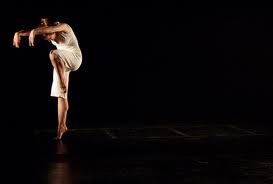
  1. I have often been mistaken for a ballet dancer. However, when people study my style, they realize that my motif is more contemporary slash jazzart, if you will. Interpretive dance is my preferred movement.

    Dance (via societies.cam.ac.uk)
  2. I am easily bored and take little interest in anything around me. Especially other people.

    Boring (via jmorganmarketing.com)
  3. Nothing relaxes me more than sitting down with a mug of hot cocoa and a jolly good game of Sudoku.

    Sudoku, or as I say, "let the fun roll" (via stellalunaa.xanga.com)
  4. I wish I was funny enough and brave enough to be a stand-up comedian.

    To stand up or to sit down (via dailycomedy.com)
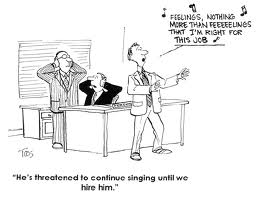
  5. I love applying for jobs and going for interviews. These are the funnest things you can do in London.

    Ah, mad fun at interviews (via utahtechjobs.com)

So, study these points carefully because hidden among them is a truth about me that you would never be able to guess.

Maura, you’re fantastic – thanks for sharing this award with me. Jill, you’re the bomb. Pleased to meet you.

I think I am going to cop out of chucking the grenade towards anyone in particular, as I know many of you have had this honour already. If anyone reading this feels so inclined and wants to grab the mic, or the grenade, or the kitty – knock yourself out. But beware … the ticking starts now.

Sunshine signing off for today!

For Auld Lang Syne

I wrote about Scotsman, Andy Murray, yesterday and then I went to do a Pilates class with the most enthusiastic, chatty Scotsman since William Wallace. Today I thought I would introduce to you some more of my husband’s Scottish family: meet Mac and Lily*.

*I have given them false names, as you probably wouldn’t believe the names by which we knew them. I thought about calling them Mac and Cheese. Nah.

I can’t tell you what a blessing it is to have married into a Scottish family. Mac was my late mother-in-law’s brother. He would have been about 87 now, and Lily would have been about 84. They both passed away in Scotland within the past eight years. They had no children of their own, and adored their nephews (my husband and his brother) as if they were their own. My husband is named after Mac.

Let me tell you what I know about Scottish names. My husband has three first names and is known by his third name. He likes his first name, and when he asked his parents why they didn’t call him by his first name, they said it was because they didn’t like it. Right. They had named him after his uncle, and clearly his parents hadn’t liked his first name either, because he was always known by his second name. We knew him by an entirely different nickname all together. And to add further confusion into the mix, the name my husband is known by is the same as his father’s. And his father was known by the first of his three names, even though he was given an entirely different name at birth (see Not Just Another Winter’s Tale).  And his brother is known by his second – of three – names. You’re confused?

So back to Mac and Lily: I first met Mac when he flew out to Zimbabwe for our wedding in 1984. He arrived unannounced and threw the entire family into frenzied excitement, leaving my garrulous mother-in-law speechless. He was a true Scotsman: he’d insult you then hug you, he’d laugh at you and with you, and tears and laughter gurgled in equal measure. Love of family, humour, generosity, love and kindness ever lurked behind his thinly brittle exterior. I loved him immediately.

I first met Lily when my husband and I travelled to the UK in 1986 and we stayed with Mac and Lily in their wee croft in Perthshire. Lily was about knee-high to a grasshopper and was teased mercilessly by Mac for being so wee. She was a hairdresser and her stories of colleagues and clients and running a salon in Zimbabwe (as she had done for a number of years) are stuff of my husband’s family legend.

Returning to Scotland, she worked at the old folks’ homes, doing the hair of the “old biddies”, as she called them. She never fussed too much about whether her work was good or not, as she chose to live by her belief that the difference between a good haircut and a bad haircut was about three weeks. Possibly longer for the old biddies. She was gentle, kind, quick to laugh, generous and loving: I loved her immediately too.

We saw them every couple of years after that; when they travelled to Zimbabwe and then South Africa for holidays, and when we visited the UK on holiday. Just as they had taken my husband and his brother as sons, they took our boys into their hearts as grandsons. Mac taught them stories and language that, shall we say, broadened their education.

Our boys were little when Mac and Lily first came to Cape Town. We’d told the boys how funny Uncle Mac was and they couldn’t wait to meet them. Our older son, who was about four at the time, laughed loudly and unconvincingly the first time Mac said something, and then looked at us and asked,

“When’s he going to be funny?”

I think he’d imagined a clown.

Our younger son, aged about two, sat on my husband’s lap and watched Mac with interest. After a while, my son grabbed his dad’s face between his hands, pulled his face towards him and, gesturing towards Mac, said,

“Him’s got a big nose. Hey, Daddy?”

One day my older son had a friend coming over to play, when Mac and Lily were with us in Cape Town a few years later. I heard my son say to his friend,

“My uncle and aunt will be there. I’m really sorry but my uncle swears a lot.”

His friend, ever the gracious trooper, said,

“Ooh, that’s okay. I think that will be rather fun.”

Mac was fun. He’d run and play soccer with the boys in the garden, until his smoke-ridden lungs would cause him to gasp and return to the sidelines. As he lit a cigarette, he’d say,

Bleep bleep! Those bleep bleep kids sure take the bleep bleep bleep out of you! I’m not as young as I bleeping-well used to be.”

He’d wrestle with the boys and then send them on their way. He’d watch them play sport and boast about them to his friends. He laughed at their jokes and regaled them with stories.

We had a wonderful time staying with them in Scotland in 2000. They took us all over their native Perthshire, showing us the beautiful countryside and introducing the four of us – with enormous familial pride – to everyone they met. They took us to the Highland Games in Pitlochry and Mac went to tell the organisers that “B’s son” was there (my mother-in-law grew up and went to school in Pitlochry). Family was everything to Mac and Lily, and we knew we meant the world to them.

Lily would cook wonderful meals for us all, and our best times were when we sat and chatted over coffee and chocolate biscuits in their lounge in the weak mid-morning sun. She and Mac were always interested in our lives and what we had to say, and asked us questions constantly.

One evening, we sat in their little lounge, next to the ever- glowing fire, as Mac relaxed into his favourite pastime: reminiscing. He told us of a Hogmanay party at their house a few years before, where Mac pretended he was a soldier. He put a bucket on his head, and with a broom as a rifle he marched back and forth through their small lounge. It wasn’t long before he smashed the light fitting with the broom and caused the party guests to collapse into hysterical laughter.

He then went further back, to recount tales of his inordinately naughty childhood. He told us of all he and his brother and friends got up to at school, including putting one teacher’s car up on to bricks and waiting to watch as the teacher tried to drive off at the end of the day. Mac and his mates lurked in the bushes, and as they watched the teacher they rolled over and laughed like drains.

He was constantly in trouble. That naughty streak glinted in his eyes through his whole life. Not even the unspoken-of horrors of his wartime service could quench that spirit.

His school-day nostalgia then reminded him of his favourite poet: Robbie Burns. He told us he had once recited Burns at a formal occasion. He ran upstairs to haul out his notes and proceeded to recite the elaborately un-understandable words of Burns to an audience of us. To our African ears, it sounded like,

“Heenel honnel, heenel honnel, heenel honnel, aft the glen.”

His sudden move into serious poetry was at odds with the evening’s levity. The absurdness of the poetry, the absurdness of this sudden turn of events and then, spotting their mother fixing to burst with laughter, caused my sons – and then all four of us – to explode into childish laughter till we cried. Mac was taken aback:

“What the bleeping-bleep you lot laughin’ at? This is Rabbie Burns! Don’t ye like him?”

We tried, we really tried to pull ourselves together but the words of Robbie Burns will forever be etched in our memories in the schoolboy style of Mac’s recital and our childish inability to stop giggling.

I miss Mac and Lily. All of our family does. And I understand why Mac loved to reminisce. It keeps the memories alive.

Sunshine signing off for today!

Lay On, MacDuff!

Last night we went to see Macbeth in the Blitz at a small community theatre on the other side of the river from where we live. The whole concept of community theatre appealed to me and I was so excited to go and enjoy an evening of local talent. I use the word talent local very loosely: it would have been quicker to swim across the Thames.

I misunderstood the blurb about the play. It read:

“It’s January 1941. The Docklands is in the midst of the Blitz. The shattering attack on East London is having devastating effects on its people and the landscape. In an attempt to restore normality, to resist in the only way they can, a group of actors perform Macbeth in an air raid shelter.”

My expectation was that the play would be about a theatre group putting on Macbeth during those difficult and horrendously frightening days. Instead, the play was Macbeth with the screeching of sirens and the sounds of bombs going off every now and then. The costumes were appropriate for that time, but apart from that the sense of history and context was kind of lost. I would have loved to have known the back story.

The cast reflected the diversity of London in 2011, complete with a female King Duncan and accents from Eastern Europe, Asia and South America. There was some fine and passionate acting and it was certainly an ambitious project for an amateur dramatics group to take on. We particularly enjoyed the actor whose self-conscious default was to stand with his arms hanging about his sides like guy ropes.

The play was put on at The Space. I had read about this beautiful old building in the Isle of Dogs, and had long wanted an excuse to visit. Last night’s play was the perfect opportunity to do so, although there was no direct route to get there – we had to take a bus, a tube and then another bus, although we could have taken a ferry then a bus. A twisty route, indeed.

The Space is a community arts centre, offering theatre, music, comedy and dance. Converted from a beautiful 19th century church, with stained glass windows, and a high, domed ceiling, The Space offers a theatre space as well as a delightfully cosy cafe/bar upstairs, known as the Hubbub. The theatre, as it was configured last night, seats about 50 people. The audience sat on either side of the hall, with the play taking place in the middle.

The Isle of Dogs is an almost-island in the East End of London, in the loop of the largest meander of the Thames. There is some speculation as to how the name Isle of Dogs came about, but it was recorded as such for the first time in 1588.

Two more tickets for our red box. A visit to another area of London we’d not seen before. An interesting performance of Macbeth in a beautiful, historic venue. It was worth braving the cold and the circuitous public transport route for all that.

Sunshine signing off for today!

Is All the World a Stage?

So if it’s Thursday, I must be writing about Zumba, right? We had a wonderful class again last night, and, in the midst of our stomping and twirling, I caught a glimpse of myself in the mirror. You know what? I look stupid doing jazz hands. Seriously stupid.

I wrote last week about how amazing it is to dance like no-one’s watching. It truly is. I guess that’s the important part: I need to make sure no-one’s watching, and I don’t want to watch myself either. How embarrassing!

I’m not much of a performer, I guess. I love nothing better than to tell a story or share a joke and make people laugh – my heart leaps when I am able to do that. I’m not shy. And I have done loads of public speaking. But to perform in front of an audience, like to dance or sing or act, would cause me to cower into a shivering heap. Or to go and hide under the nearest bed. An audience of one, in the mirror last night, was enough to cause my cheeks to burn crimson.

I did plenty of amateur dramatics as a little girl. I am the youngest of four, and my performances usually took the form of hands-on-hips tantrums at my older siblings to take me seriously. If they tried to applaud any one of those performances, they would have instantly regretted it.

My sister was always something of a thespian. Her favourite activity of a weekend was to write, produce, direct, narrate and star in a play for my parents. I remember one of our family homes had sliding glass doors that separated the lounge from the dining room: the dining room became our stage, the sliding doors our scarlet, velvet curtains. The audience, usually of two, relaxed in the royal box that was our lounge.

I was always a useful prop. I remember having to put on my school tracksuit – it was olive green – and stand with my arms in the air for the duration of one play.  In the closing credits, I was allowed – as the tree – to take a bough bow.

Occasionally, when the demands of writing, producing, directing and narrating were too great for my sister, I was given the title role. I remember being cast as Rapunzel and having to sit on a chair on top of the dining room table and let down my “golden hair”.

Let me digress here to tell you a bit about my hair. My parents believed in common-sense economy and their approach to life was typically post-war: no nonsense, no frills and definitely no long hair. Every time my sister and I went for a haircut, I’d long to have a word in private with the hairdresser, so I could ask her for “a trim”. It never happened. My mom would always insist on a “good haircut”, which meant that – yet again – I would walk out of the hairdressing salon looking like a boy.

So, golden locks were not in abundance in our home. I am blonde, but short hair that did not quite reach my collar would not do for Rapunzel. We twisted a yellow and white striped towel that tumbled from my head like a really heavy plait, and my handsome prince duly climbed that to reach me in the tower that was the top of the dining room table. I think we might have used a chair or some other hidden device, but it all ended happily.

Another time, I was cast in the role of Queen Victoria. Gordon, a painfully shy and obnoxious little boy who was the son of my parents’ friends who were visiting that Sunday, was cast as Prince Albert. He did not want to be in the play. His older sister threatened him with something, so he duly obliged. We sat on chairs next to each other, as husband and wife usually do: I had a doily on my head, and he was biting his foot.  I banged on about how much I wished we had a baby, and he nodded and chewed his foot and closed his eyes. The curtain went up.

“Three weeks later!” announced the narrator, my sister. The curtain opened to reveal a scene in the home of Victoria and Albert. With doily-decorated head, I lovingly cradled a baby doll in my arms. Albert continued to bite his foot. An immaculate scene indeed.

At high school I had the excruciating experience – as house captain – of having to direct and act in a house play. I had no intention of appearing on stage, but as the date of our performance neared, several cast members got ill, broke their legs or lost their voices. The play was called “Ants” and I had to play the part of an army ant, dressed in camouflage fatigues. I wouldn’t let my parents come and watch the play, and my time on the stage features among my worst, most sweaty-palmed and agonising moments of my life. I was certainly not born for a career in theatre.

So, my stupid jazz hands are not going to hinder me from going to Zumba classes. I’ll continue to shimmy and twirl and stomp my feet to those crazy Latin beats, but I’ll sure as heck step away from the mirror. Well away.

Sunshine signing off for today!

There’s None So Blind …

I’ve just got home after a morning out. As I sat waiting for the bus, an elderly lady came and sat next to me in the bus shelter. To say I felt jolly freaking irritated at her behaviour, would be putting it mildly.

She sat and munched on her false teeth. She pushed them around her mouth, clicked and clonked on them endlessly, and made an awful sound. She also fidgeted and twitched and bounced her legs up and down and rocked the bus shelter seat. Then our bus came.

Up she got, and she shuffled to the edge of the pavement. As she stood there, her legs bounced continuously. Involuntarily. I realised – to my shame – that she must have some condition that causes her to move constantly and involuntarily.

I wanted to cry as I realised the level of my intolerance, and my snap judgment of her behaviour, without thinking beyond how it was affecting me. How pathetic. A humbling – indeed, humiliating – reminder, for sure. I wanted to apologise to her for my thoughts.

A few years ago, a call came through to my desk at work. It was a man who had booked a counselling session at the organisation I worked for, and he wasn’t sure how to get to the offices. I enquired where he’d be travelling from, and proceeded to give him directions.

I expected that sooner or later the directions would sound familiar. Not so much. Nothing seemed to make sense to him; he repeated everything I said a few times, and I wondered why he was so unsure of landmarks and road names. I did feel a little impatient, although I duly repeated each instruction at his request.

An hour or so later, the office doorbell went and, because our receptionist was not at her desk, I went to open the security gate. I greeted the new arrival and he immediately said that he was the one who had called for directions.

I opened the gate, and he struggled a little as he made his way through. He was carrying a white stick, you see.

Not one ounce of me had considered that it might be because he was blind that he was unsure of the directions I was giving him. Nor that he was passing the instructions on to his driver.

My slump into shame was soon lightened by his delightful personality. As I showed him through to the reception area, he asked if he could hold on to my arm.

“It’s a little dark in here,” he said.

He then asked if I would show him to the bathroom, and he chirped and made me laugh as we made our way through the building.

“I don’t look so good,” he said.

I was shaken and stirred and mortified at my blinkered inability to consider another perspective. I had looked at the world through my own lenses, without stopping to consider those lenses were mine alone.

Today I was similarly reminded. My prayer and my desire is that one day my world view will embrace all possibilities, not just my own. There is seriously none so blind as she who will not see.

Sunshine signing off for today!

Walking Through History

I have walked through a couple of centuries of history during the past week. Venturing along some cobbled walkways that featured in Charles Dickens’ Oliver Twist and sipping wine in the Devil’s Tavern, I feel well and truly steeped in years gone by. Oh, if walls could talk.

Now, if I were a brilliant writer in the league of my friend, Kate Shrewsday,  I would recreate some of the history I walked through and keep you rapt throughout the journey. Sadly I’m not, so I will describe my experience of the places, share some photos with you and leave you to follow the links to find out more.  This city is truly amazing.

Last week, I went with a friend to a gorgeous little tea shop in Shad Thames, called the Tea Pod. To get there, we walked from our homes to the south side of the River Thames and walked through an area known as Butler’s Wharf and through to an ancient, cobbled walkway known as Shad Thames.

I didn’t have my camera with me, so on Sunday my husband and I retraced those steps so I could capture the image that took my breath away, as we rounded Butler’s Wharf. It is the image that reminds me that – and why – I live in London; this awful, compelling, fearsome, exciting, culturally-rich, historically-steeped, embracing, cold and infuriatingly beautiful city that I currently call home:

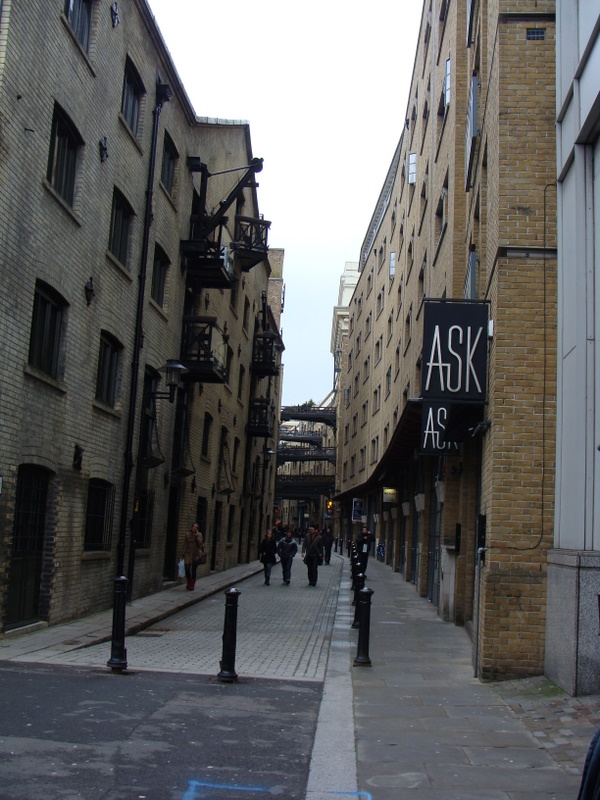
We walked along the edge of the Thames before taking a left turn at the Design Museum, which brought us to this, the beginning of the walkway known as Shad Thames:

Despite the modern shop fronts and the ever present sight of a Starbucks at the end of the lane, you can imagine little urchin pickpockets running around, helping themselves to the spoils of the rich. In the delightful Tea Pod, there is a sign that cautions patrons to beware of ill-motivated people who lurk the streets and help themselves to others’ property. Or words to that effect. While I know they don’t mean tax-collectors, they could just as well have written: “Beware of pickpockets. This is Oliver Twist country.”

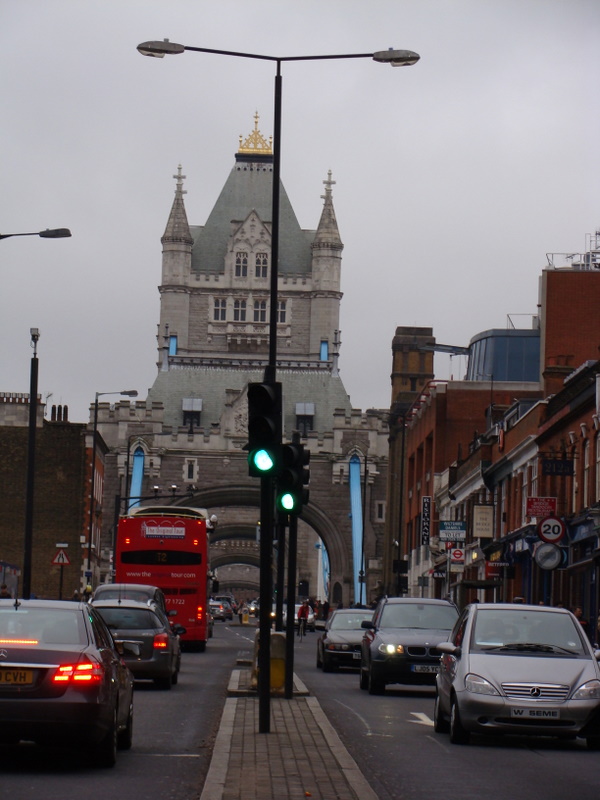
The Shad Thames ends at this point:

This is the view of Tower Bridge if you were to drive or walk across it:

Walking back south along the river, we came across this community of barges, which I understand is the natural habitat of several local celebrities. We watched for a while, but none of them emerged from their hide-aways. I did, however, dream a little and imagine the romantic life of a boat-dweller in the city. Pretty cold, but I can’t imagine a more authentic view anywhere else in London:

You don’t need to worry with public transport, or walking:

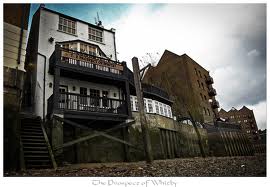
On Friday night, we went to a public house that is known to be the oldest riverside pub in the UK. The Prospect of Whitby, on the banks of the River Thames in Wapping (almost exactly opposite the area we live in), dates back to 1520. Looking at it from our side of the river, you can see that it has defied development and modern architecture; the contemporary buildings on either side, with their straight lines (up and down like a s**thouse door, to quote a famous author) accentuate the wobbly, off-centre facade that characterises this ancient pub:

Known originally as The Devil’s Tavern, it developed a reputation as a meeting place for villains and smugglers, cut-throats and “footpads” (thieves that prey on victims while they walk). The hanging post stands ominously on the beach in front of the pub as a stark reminder of the public end that such criminals met some centuries before:

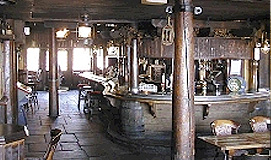
The interior of the pub is warm and cosy, and it is filled with nooks and crannies, broad walls and dark wood surfaces everywhere: 

An upstairs wall bears a wooden plaque, bedecked with the names of monarchs who have reigned on this island since the pub has been open; such history leaves me breathless.

So I’ve added a few more digits to my pedometer over the past week, I’ve walked in the steps of smugglers, villains, pickpockets and kings, and I’ve thankfully not been accosted by footpads or cut-throats. My fascination with this ancient, modern city never wanes.

Sunshine signing off for today!

London Makes You Laugh

I think I am in love with Greenwich. I keep finding more reasons to adore the area, and last night was no exception. We went to Up the Creek, a comedy club, for an evening of brilliant, stand-up comedy. Two more tickets for our red box, and another excuse to enthuse about the area where time begins.

I’ve been longing to see some real, live stand-up comedy in London. I saw Ricky Gervais at Wembley last year, and he was fabulous, but such a huge venue loses the personal feel and cringe-worthiness of a dark, intimate venue just up the road. Last night we took the ten minute bus ride, joined the queue to get our tickets and to get a “glow-in-the-dark” X drawn on to the back of our hands, and then went into the darkened, red-seated cavern that is Up the Creek.

I was fascinated with the temporary tattoo on my hand. I tried to look at it through cupped hands, creating my own kind of darkness, but it didn’t work. I also meant to ask my husband if they also drew a “Y” on the back of his hand, but I guess they didn’t have to be chromosomally correct.

We took our seats three rows from the front. Seating wasn’t booked, and we noticed that the front rows were conspicuously empty until some latecomers had no choice but to sit directly in the firing line of the comic guns.

There was a wait of about an hour before the comedy began. We heard the guy behind us – he was from up north somewhere – tell his friends, at least three times, just how f***ing brilliant the headline act was. He told his friends he’d seen him once before where he performed for two hours on the trot.

“I tell you, he was f***ing brilliant. We were creased up.”

Ah, that delightful English gift of understatement.

After an hour, compere Dan Atkinson took the stage. Dressed in a suit, with an impossibly foppish fringe, he proceeded to take the mickey out of anyone within spitting distance of the stage. He engaged ruthlessly with audience members, bringing his quick, acerbic wit to every encounter.

He introduced the first act: a comedy sketch trio who call themselves The Pappy’s (sic). They were incredibly corny, but so corny we found ourselves laughing despite ourselves. An example: a job interview sketch, where the interviewee couldn’t think how to answer the questions he was being asked. He called out for his imagination, which arrived in the form of fellow comedian, dressed in a shower cap, dressing gown, bizarre funnel hanging from his nose and jumping – very badly – on a pogo stick. I rest my case.

Dan came back to pick on a few more unsuspecting patrons. He chose to engage with one newly front-rowed patron who had had a riveting Sunday: she’d made bread. White bread.

After a few jibes at what he thought the patrons from Croydon would make of that, he introduced Act Number Two: a delightful, young, gorgeous and – as I’ve seen him described – fresh-faced Scottish comedian by the name of Iain Stirling. He had us at the accent, but he was also really funny. He delivered a bunch of clever gags, poked wicked fun at the Scottish, and batted off some stupid comments from the snotty patrons sitting in front of us.

Next up, after a further audience battering from Dan, was Nick Helm, a frenetic and engagingly pessimistic and self-deprecating comedian who really made us laugh. The self-acclaimed “human car crash of light entertainment”, he started off by picking on a meek and, clearly, boring young guy in the front row and yelling at him at the top of his voice: “DO YOU LIKE COMEDY? DO YOU LIKE COMEDY? DO YOU LIKE COMEDY?”

In a style reminiscent of George Carlin, he delivered a number of brilliant one-liners, recited a gin-fuelled love poem and sang us a delightful song written to a female friend of his about her good-looking boyfriend who makes her “look fat”. The song ended with a plea to her to consider going out with him, because “look how good you’d look next to me”.

Dan came on for the final time to introduce the headline act, and the reason we’d booked to go to this show: Micky Flanagan. The room went ballistic as the brilliant Cockney comedian took the stage and shared his unique, down-to-earth brand of humour that has gained him popularity all around the UK. Describing himself as “proper proper workin’ class”, he grew up in the East End of London.

“Before the gentrification of the area that brought rich people into the East End, we would walk the streets dreaming of Essex,” he said.

His father, he said, was a casual criminal, his mother considered alphabet spaghetti a luxury, and he said his nan (grandmother) used to take him “daan the pub” to teach him how to take the p*** out of people.

“If they can’t hear us, we’re not doin’ them no ‘arm,” she’d say to him.

Without resorting to humour that is crude or vulgar, he kept us laughing for the full hour. His gags are aimed largely at himself, British culture and his own working class roots. He performed at last month’s Royal Variety Show in London – check it out here, you’ll see what I mean.

He engaged with a few front rowers in a gentle and un-mocking way and managed to bat off – graciously – the increasingly annoying punters sitting in front of us. I don’t think, however, he called them annoying punters.

We walked to the bus stop, replete with humour, well creased-up from laughing and so glad to have discovered another treasure on our doorstep in Greenwich. We’ll be back there for sure.

Sunshine signing off for today!

Waving and a-Shaking

You know those awkward moments when someone across the room waves at you? Well, at least you think it’s you. You wave back tentatively only to discover they were waving at the person behind you. They haven’t even noticed you. Probably because they don’t even know you.

I’ve blushed through plenty of those kinds of moments. Like the awkward “should I, shouldn’t I” moments when you meet someone and you’re not sure whether or not to shake hands with them.

The other day, I went to have coffee with the pastors and team at our church. I arrived at the offices, greeted the various people I saw and then one of the elders came over to greet me. He extended his right hand towards me and, while I thought a handshake to be slightly formal, I did the same. As I extended mine towards his, he lifted his hand and scratched his head. And then he laughed like a drain.

I blushed, but then my phone rang and I answered it. I told the elder it was 1968 calling and they wanted that joke back.

A few weeks ago, I arrived at my gym to do a Pilates class. Our instructor was away, and a “cover girl” took the class in her stead. As I walked into the class, ticket in hand, the instructor started walking towards me. She told me she was covering the class and told me her name, and extended her hand towards me. I told her my name, and duly shook her hand.

She giggled a little and then asked me for my ticket. Clearly she had put her hand out for me to give her my ticket. She got a handshake in its place. Awkward.

And now to the joys of adolescent sons and their over-communicative mother. (Although that’s not how my sons would have described this moment.)

Some years ago, I went to watch my younger son play in a mid-week rugby match at a local school. I had arranged for my older son to be dropped off at said school after he had finished his day’s activities and, as I watched my younger son play, I kept an eye open for the arrival of my other son.

I spotted my older son as he arrived on the far side of the field. He was about 14 at the time. This is important.

I waved at him, and he didn’t wave back. I thought he wasn’t looking in my direction, so I kept watching him and waving at him. I thought he didn’t know where I was. He continued walking towards me, but I still wasn’t sure he’d seen me.

After wave number four hundred, I focused my gaze back on the rugby game in front of me. My younger son was directly in my sight, play had stopped momentarily for a penalty, and he was waving at me. Coyly, barely lifting his hand above hip height, and agonisingly hoping no-one else could see him, he was waving at his mom from the middle of a rugby match. He was twelve.

I realised immediately what had happened.

My older son arrived at my side, and he said to me, “Mo-o-o-m, I saw you as soon as I arrived. You didn’t need to keep waving at me; I was walking towards you.”

After the match, I asked my younger son if he thought I was waving at him. He said he did, and he wondered why I kept waving at him in the middle of his match. He was so embarrassed and thought if he waved back, I might stop.

So next time you want to wave at someone or shake their hand, think about it carefully before you do anything foolish. It’s a jungle out there, I tell you, a jungle.

Sunshine signing off for today!